GudFood Vdoma · Handed off 2024
The loop that brought users back
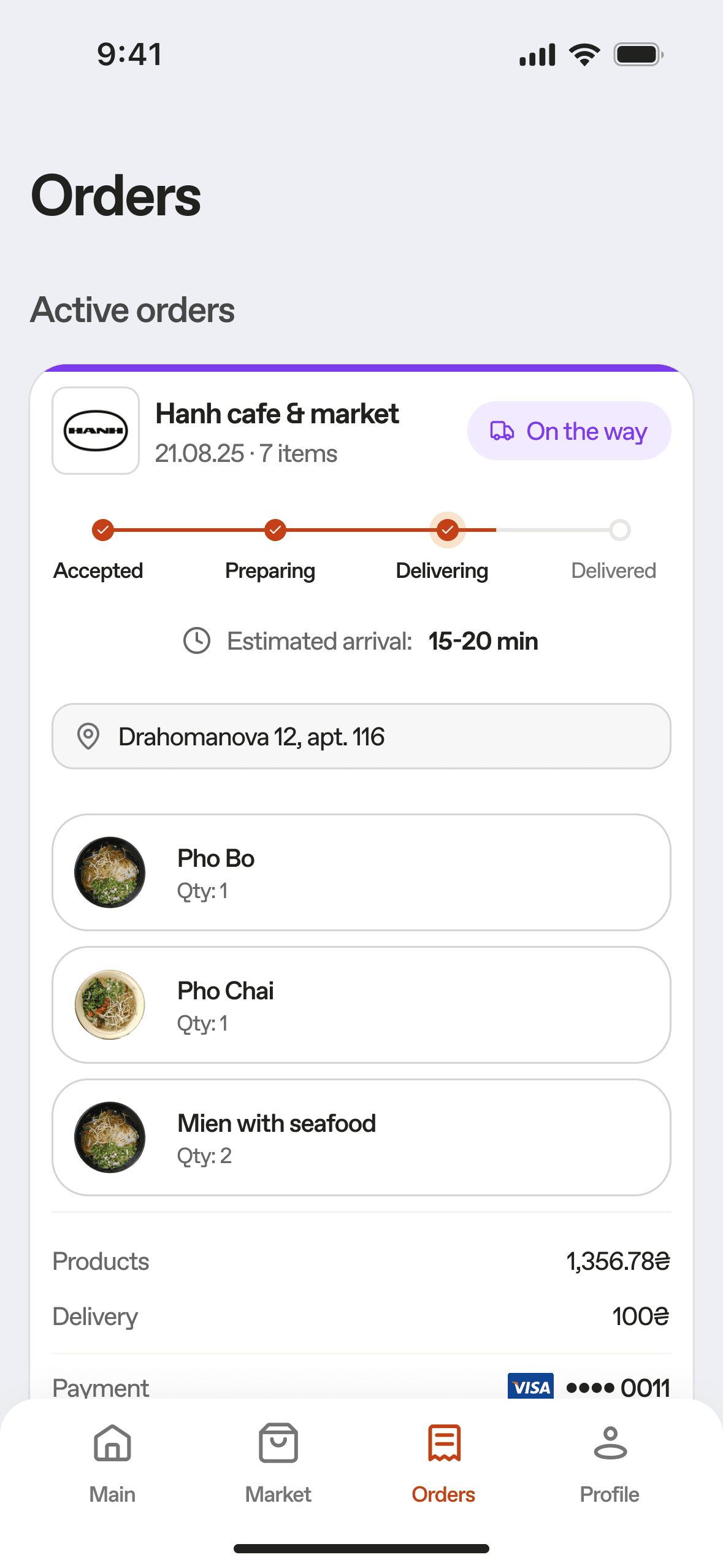
 On the way


- Role
- UX/UI Designer
- Timeline
- Sep — Nov 2024
- Status
- Handed off 2024
Scope
- Stakeholder Interviews
- UX Research
- Hypothesis Generation
- UI Redesign
- Prototyping
Overview
Why don’t customers come back after their first order?
GudFood Vdoma is a Ukrainian frozen food delivery service, both a D2C brand and a restaurant marketplace, delivering to 26 cities. The app was struggling with retention: customers ordered once or twice and didn’t come back.
Stakeholder interviews
Started with the product team to understand the business before the research.
User research
Interviews with customers and, more importantly, with people who had never ordered.
UI redesign
A feedback system and a full refresh of the core screens.
Problem
The business was making decisions without a signal from its customers.
The team knew users were churning. They had no structured data on why. No feedback mechanism existed in the app: no ratings, no reviews, no complaint resolution.
One respondent had complained through Glovo and never heard back. Another was promised a bonus item that never arrived, with no channel to follow up. Users had no voice, and the business had no data.
Research
Talking to the people who never ordered.
I interviewed 4 people, a deliberate mix: two who had never ordered from GudFood, one who knew the brand but had reservations, and one existing customer. Existing users adapt to friction over time. Non-users show you what’s actually blocking growth.
Research plan
From a business ask to five interview questions
Business challenge
Grow LTV with a loyalty programme
Problem
Make loyalty a reason to place the next order
Research goal
Uncover customers’ needs and barriers
Research question
What drives the decision to buy frozen food?
Interview guide
- Why do you buy frozen food? What makes you reach for it?
- What could stop you, or worries you, when buying frozen food?
- What matters most for you to become a regular customer of a frozen food service or store?
- Tell me about a service with a reward system you enjoy. Why does it work for you?
- Have you ever ordered frozen food for delivery? What was good and what wasn’t?
Synthesis
Affinity map of the interviews
What they value
- Speed. People are glad to see you, and it’s affordable and right next to home.
- Halya Baluvana is always nearby. If I’m wondering what to cook, I just pop in.
- It really does cut cooking time. Those fish cutlets used to be a whole process.
Pain points
- No free time, and no energy to cook.
- Delivery that arrives the day after tomorrow is too long to wait.
- You have to order a thousand hryvnias’ worth for delivery to pay off.
Habits
- It depends on the season. In summer I eat less, more salads.
- I browse there once or twice a month to see what’s new.
Fears
- With the blackouts you can’t stock up in advance.
- I’m not sure a pizza I bake at home will turn out like the café’s.
Ideas
- Promo codes and perks are what keep me spending there.
- Positioning matters. The dishes have to feel interesting.
- Show the products offline so I can check the quality first.
Persona
Sofia, built from the interview patterns
Sofia, 29
Software developer
Work leaves no time to cook, so frozen food is a perfect match, as long as she can get it fast and cook it straight away.
Says and thinks
- I usually buy frozen dishes that would be hard to make at home.
- Swamped at work today, but good thing there are dumplings in the freezer.
- I’ll look at what the store has and decide there.
Does
- Buys frozen food often
- Stocks up on dishes she’s tried and liked
- Goes to the store for something unplanned
Feels
- Calm when she doesn’t have to think about what to eat
- Happy when the food is tasty
Key insights
Four barriers stood between a first order and a second.
Delivery cost friction
100–150₴ delivery on a single 200₴ item doesn’t justify a casual purchase.
Offline alternatives win
Halya Baluvana is nearby: no planning, no waiting, no delivery fee.
A trust gap
People doubt a frozen dish reheated at home will match the restaurant.
A shrinking assortment
Marketplace items were decreasing, and not all dishes ship outside Kyiv.
Scoping
Four barriers, sorted by who can fix them
Design can fix2
Offline alternatives win
A trust and value-perception problemTrust gap
No social proof or feedback anywhere in the appHanded to the business2
Delivery cost friction
Pricing modelShrinking assortment
Logistics coverage outside KyivSolution
A feedback loop that works for users and the business at once.
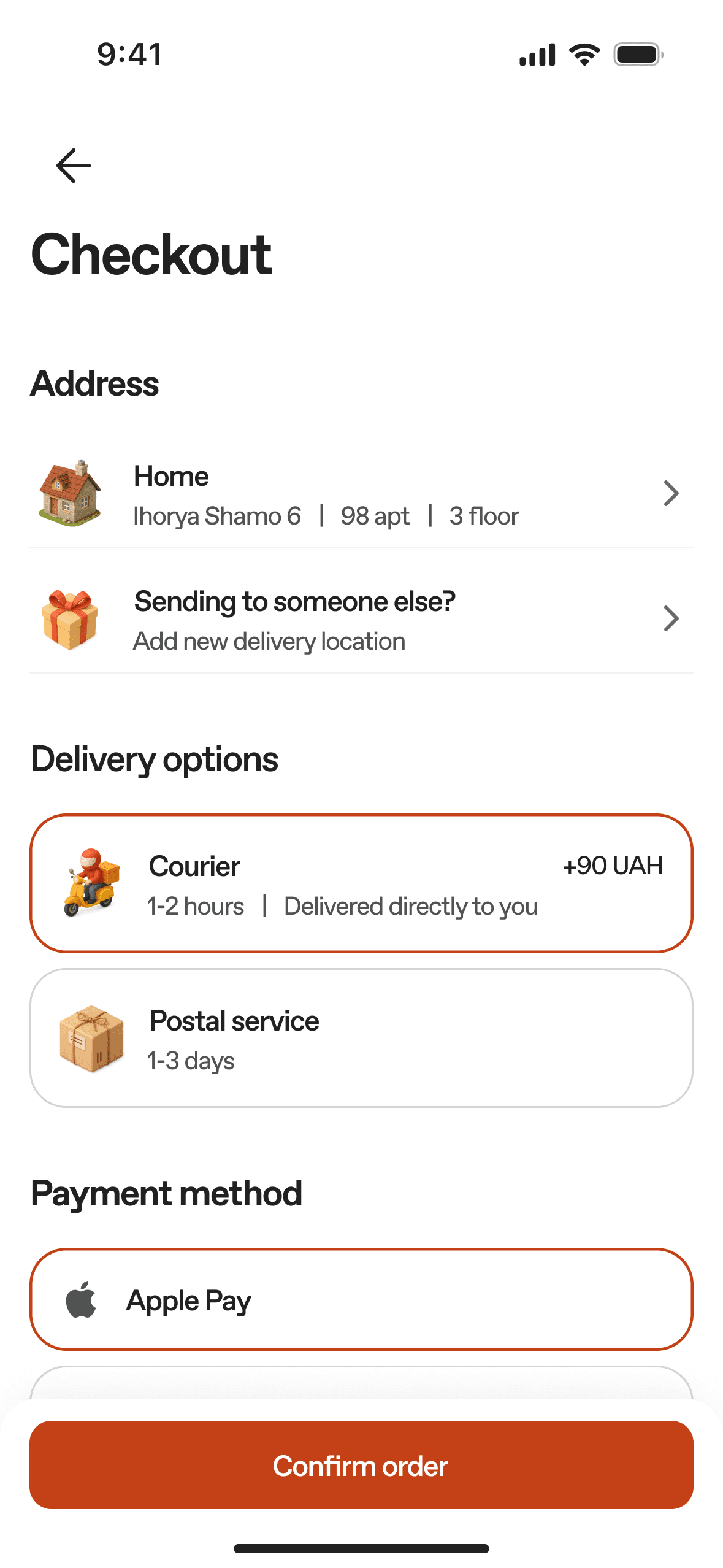
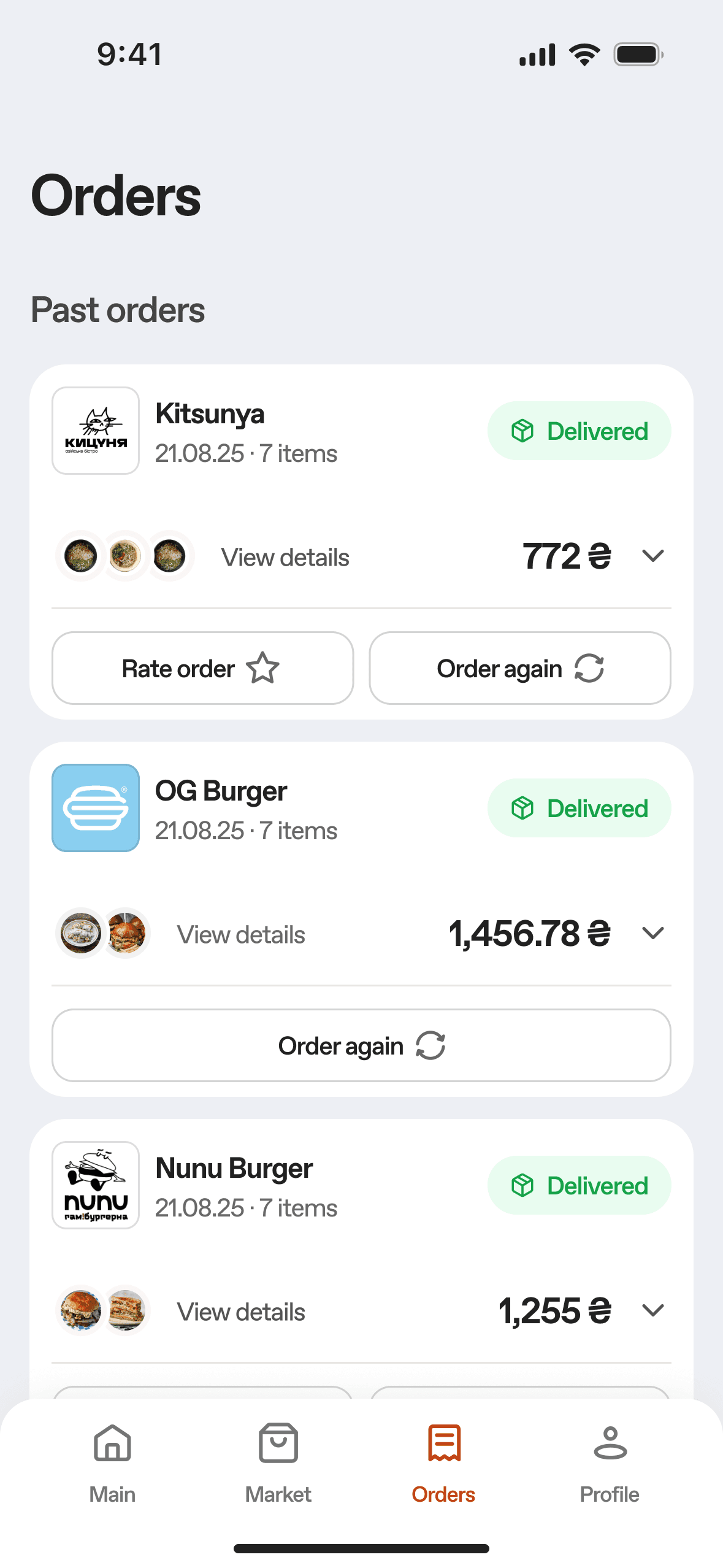
Three touchpoints: rate the order, read reviews before buying, and see how each restaurant performs. The feedback system only works if people trust the app, so the core screens were rebuilt to the standard people expect from Glovo and Bolt Food, without losing GudFood’s identity.
Core flows
Rate, read, choose with confidence.
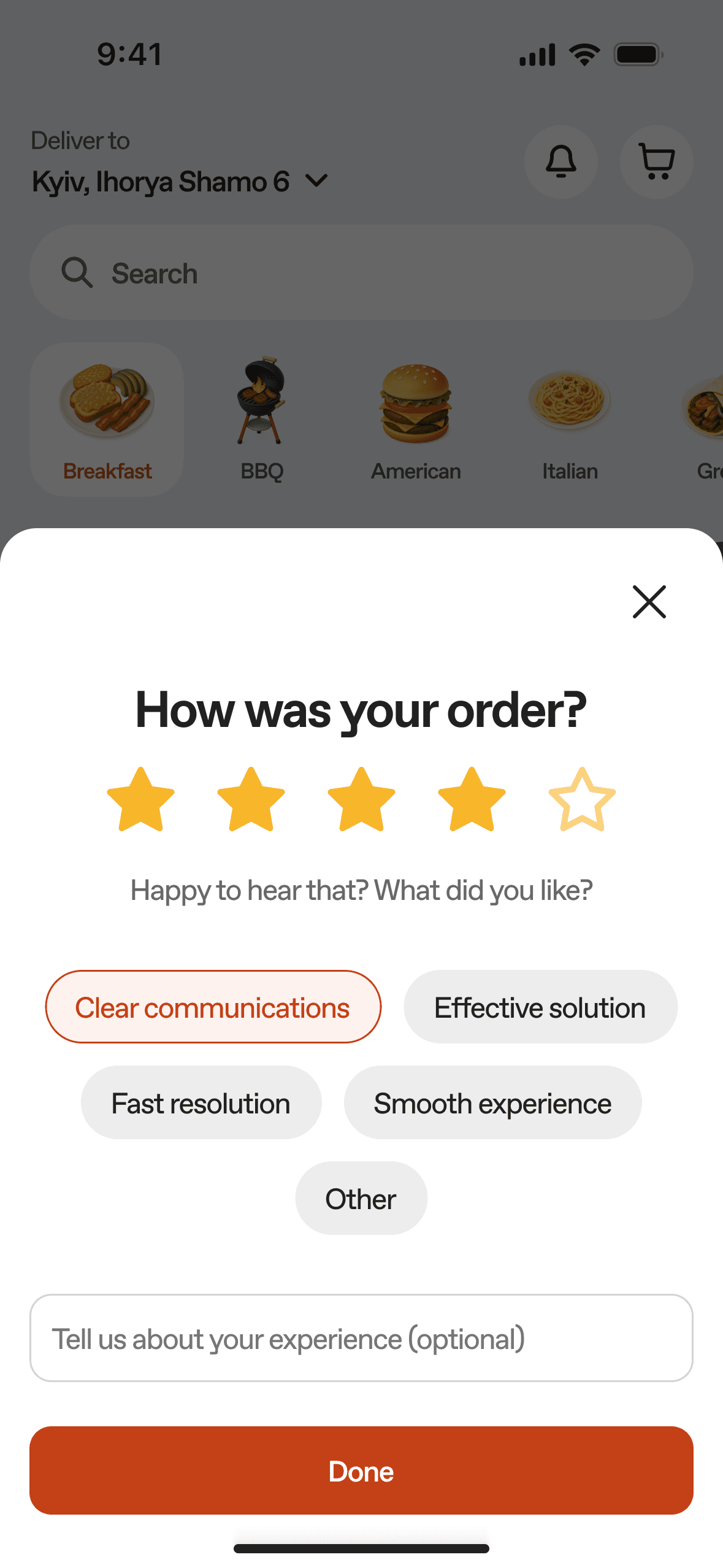
Post-order rating
Stars, quick-feedback tags and an optional note, in under 10 seconds.
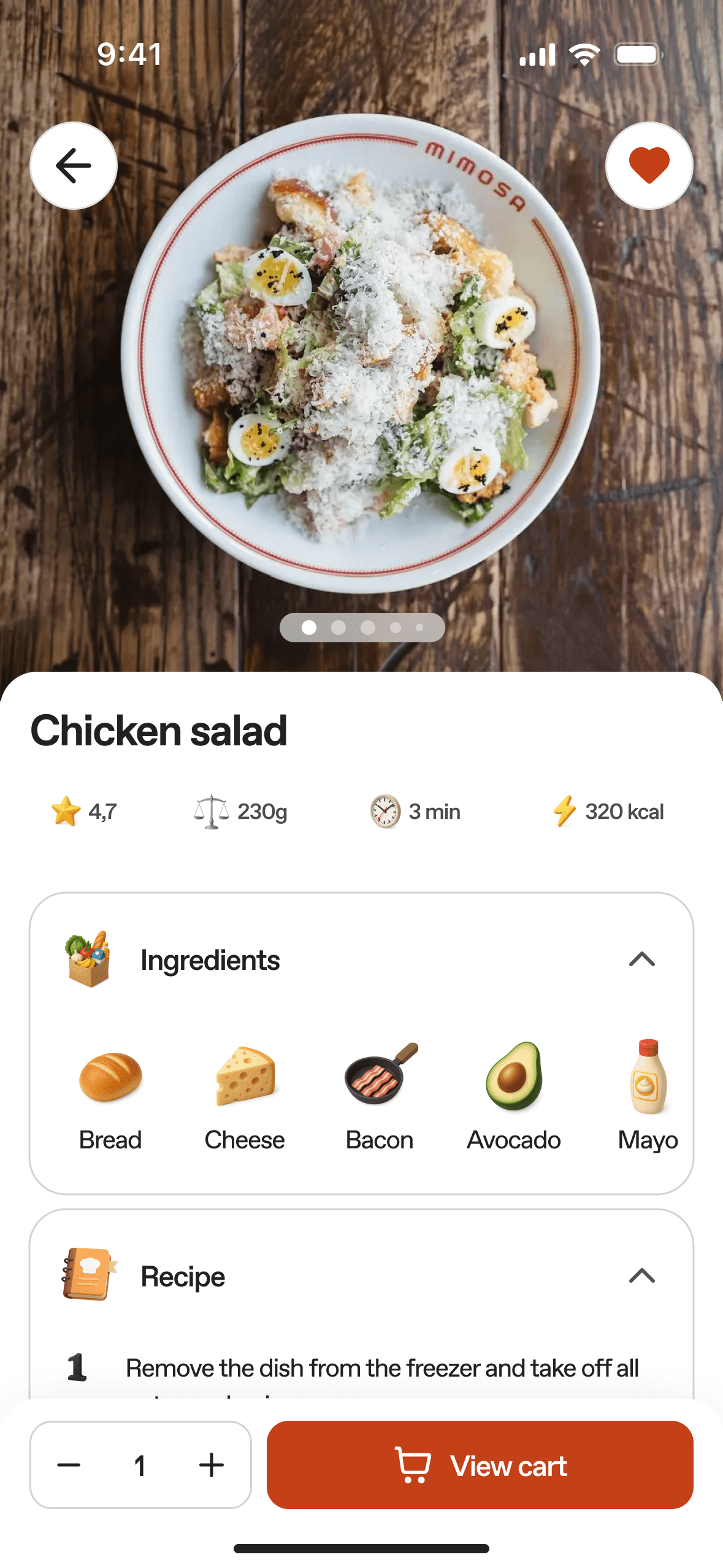
Dish-level reviews
Social proof on every product page, right where the trust gap bites.
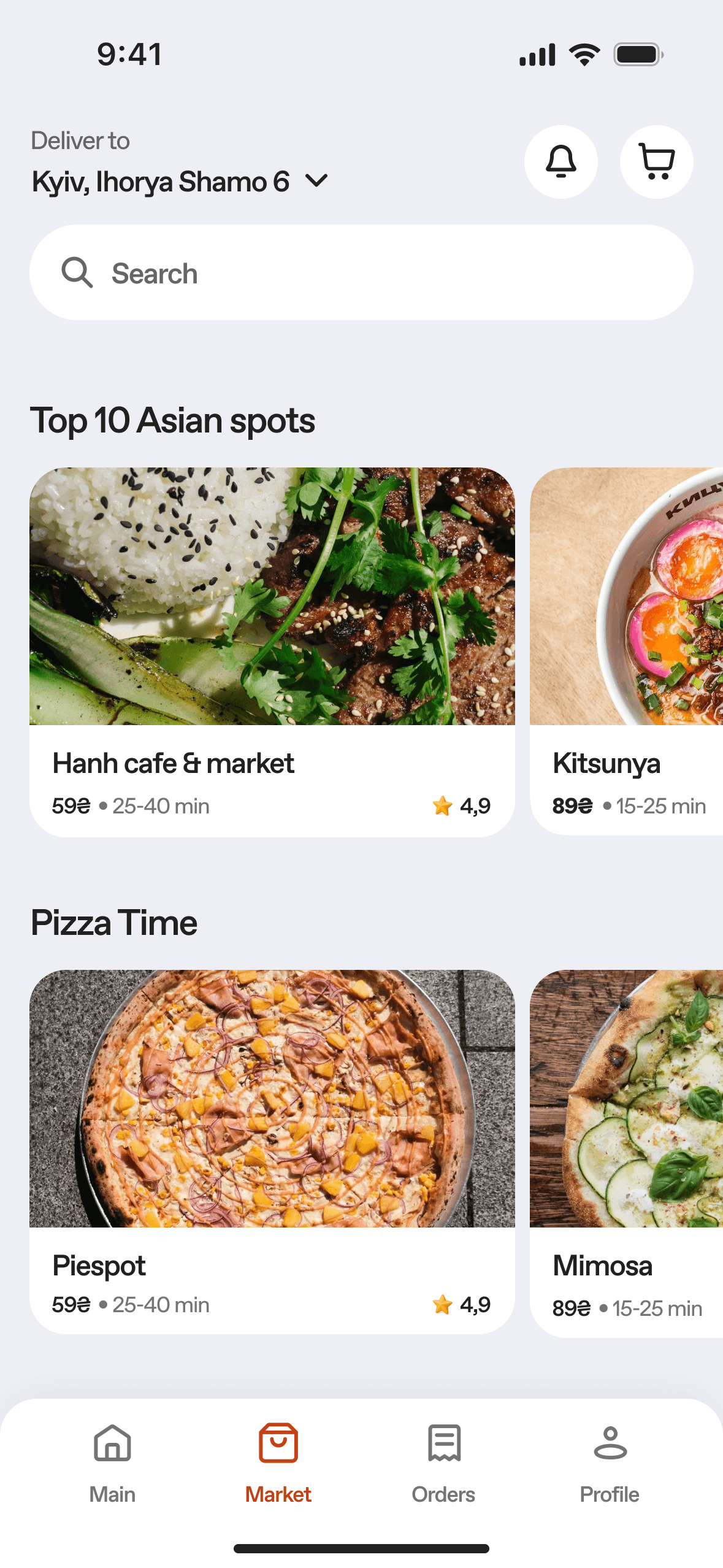
Restaurant ratings
Ratings built from dish reviews put pressure on underperforming partners.
Design decisions
Design took the two barriers it could fix, and handed back the two it couldn’t.
Low friction or no feedback
Under 10 seconds to rate. A complex form gets ignored.
Social proof where the doubt is
Reviews on the dish page answer “will it taste as good?”
Operations go back to operations
Delivery pricing and logistics were documented and handed to the business.
Outcome
Aimed at one number: repeat orders.
The hypothesis: a structured feedback loop, together with a UI that meets expectations set by mature delivery apps, drives a 10–15% improvement in repeat order rate within the first 90 days after launch.
The concept was presented to the GudFood Vdoma product team and validated as aligned with their roadmap. It wasn’t shipped, but the direction was confirmed as the right next step.